 David Craig Mackay (born 14 November 1934) is a former Scottish footballer and football manager. He represented Scotland at schoolboy level, won four caps at under-23 level and 22 full caps. He also played three times for the Scottish Football League representative side. He tied with Tony Book of Manchester City for the Football Writers’ Association’s Footballer of the Year award in 1969 and was recently listed among the Football League 100 Legends.
Mackay was born in Edinburgh, and began his playing career with the club he supported as a boy, Heart of Midlothian. He won all three Scottish Domestic honours with the club. He captained the side in 1957-58 when they broke the senior British league goal scoring record with 132 goals for with only 29 against. He was signed by Tottenham Hotspur for £32,000 in March 1959. In 2003, football managerial legend Brian Clough described him as Tottenham Hotspur’s greatest ever player. During the 1960s his fierce determination and skill contributed to the team which won the Double in 1961, further FA Cup victories in 1962 and 1967, and the Cup Winners Cup in 1963. In 1968 he was transferred to Derby County for £5,000, after Clough persuaded him to sign. In his first season at the Baseball Ground, in which the club gained promotion to the First Division, he was chosen FWA Footballer of the Year, jointly with Manchester City’s Tony Book. When he was a player at Derby County, Clough made Mackay play in a sweeping role and used his influence on the team to encourage them to turn defense into attack through a passing game.
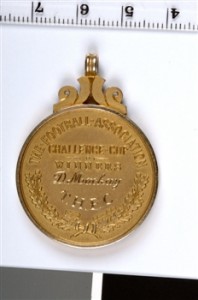 In 1971 he was appointed player-manager of Swindon Town but left after just one season to take charge of Nottingham Forest. He remained at the City Ground until October 1973, when he returned to Derby as manager following Clough’s resignation. In his first season Derby finished third in the table.In his second season in charge of Derby, he guided the team to the 1975 league title. The following season, he managed the club to a respectable fourth-place finish in the league, the semifinals of the FA Cup, and an unfortunate extra time second-round exit to Real Madrid in the 1976 European Cup. At one stage the side had been in the running for the Double.
The 1962 FA Cup Final took place on 5 May 1962 at Wembley Stadium and was won by Tottenham Hotspur over Burnley, by a 3–1 scoreline. Due to the lack of passion and excitement, replaced by patience and cautious play, the final was dubbed “The Chessboard Final”. Tottenham took to the field as holders, having won the League and FA Cup Double in 1961. They had finished the 1962 league campaign in third position. Burnley finished runners-up in the league that season, behind Ipswich Town.
Tottenham Hotspur took an early lead when Jimmy Greaves scored past the Burnley goalkeeper Adam Blacklaw. The score remained 1–0 until half time. Burnley equalised shortly after the interval through Jimmy Robson, who in doing so had scored the 100th FA Cup Final goal at Wembley. However, Bobby Smith quickly countered for Tottenham Hotspur to restore their one-goal lead. Smith had scored in the 1961 final, and remained the only player to score in successive finals for the next forty years, until Freddie Ljungberg of Arsenal repeated the feat with goals in the 2001 and 2002 finals. With 10 minutes remaining, Burnley defender Tommy Cummings handled the ball on the goal-line and a penalty was awarded to Tottenham. Danny Blanchflower sealed victory for Tottenham with a penalty that sent Adam Blacklaw the wrong way, securing Tottenham Hotspur’s fourth FA Cup win. Despite the opinion of the final by the press the game itself actually produced more action in the penalty area then any previous post war final with the two keepers being forced into more saves from shots on target than any two keepers in any previous post war final.
The game also pivoted on two moments of controversey. The first, midway through the second half when Jimmy Robson was put through to score what looked like a second equaliser for Burnley. The linesman’s flag ruled the goal out and while BBC television pictures are not conclusive the call was an extremely close one. The second centred around Tottenham’s decisive penalty when the opposite linesman flagged for a foul, presumably on goalkeeper Adam Blacklaw seconds before the handball incident for which the penalty was awarded. The referee did not seem to see the linesman’s flag and pointed to the spot while, to their credit, none of the Burnley players protested.


